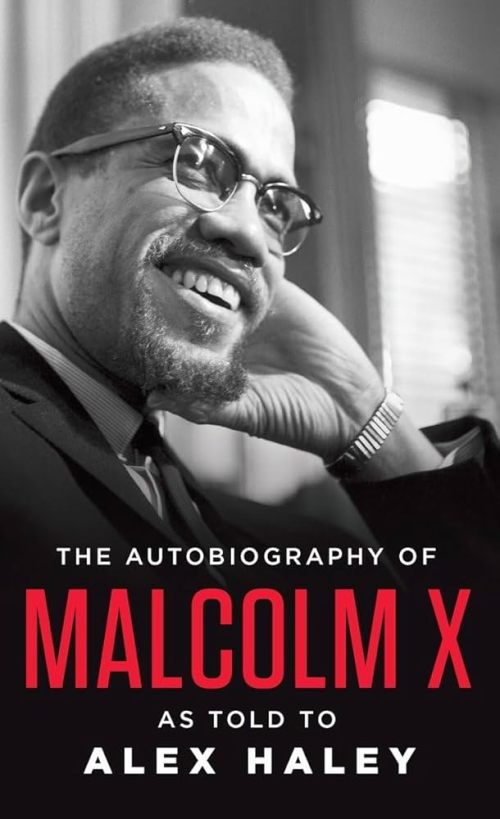
I don’t think I could tell you what I want from a good biographical work. But for that matter I don’t think I could tell you what I like about a good movie. The totality of criteria could probably fill many pages in both accounts. I dip my fingers occasionally into biographical works, and often I come away not all that satisfied. One supposes that is just how life goes. But every now and again, one falls into your hands that really stands out.
Malcolm X’s biography really stands out. I thought it was excellent.
Malcolm X was a notable figure in US politics in the 1960’s, who championed for the improved conditions of African Americans. His opinions on exactly who these conditions should improve changed throughout his life, as this autobiography points out. And it is certainly an interesting journey to watch unfold.
I came into this book knowing pretty much the basics about Malcolm X’s life. This book contextualized his life wonderfully. What was particularly fascinating was how well Malcolm described the trends habits and lifestyle choices of the people he observed in that time period. He paints a pretty vivid picture of the world he lived in at the time, and it helps you understand how he became the person he ultimately would. But the world he describes does largely feel described objectively, and even journalistically. And yet, one feels like Malcolm’s voice still rings richly in the prose. The book is a reconstruction by a prominent journalist and writer of the times, Alex Haley, who reconstructed the narrative from a series of interviews. It might just be my imagination, or an extrapolation from seeing clips of Malcolm online, but one really does feel like the voice you hear in this narrative is truly Malcolm’s. You truly feel the fire and brimstone nature of some of Malcolm’s speech (a trait which, in my assessment, exist in much American written tradition).
A careful reader will start to wonder about Malcolm’s reasoning while reading this. There is something of a very rich and deep dramatic irony reading a book where the narrator insists that the fact that he is not dead yet is a testament to the Divine’s projects for him in the future, especially on this side of history where I know exactly how Malcolm’s life ends. Whoops. But this bit of reasoning is particularly evil when looked at the light of all those people who have been victims of a horrific and premature death. Guess they don’t matter all that much in the eyes of the almighty.
If I had to put forth some kind of criteria for appreciating this work, I would bring up the fact that while I was reading it, despite enjoying the narrative and following the course of events, I did find myself not immediately or always on Malcolm’s side. For me, the fact that a non-fiction account of events feels like it gives a reader a chance to have their own opinions on this part of history makes the whole thing feel honest. Malcolm is not here a propagandist, but a person who feels like the events of his life speak for themselves about the nature of African-American issues of that time, and he has the confidence to believe that you by your very reading will reach the same conclusion, without a need to force it.
For as much as I hate to parallel a work of non-fiction with a work of fiction, but the last chapter of this reminds me just a bit of the final chapter of A Clockwork Orange, where the main characters comes to a repentance of their previous views. In the final chapter Malcolm describes how his opinions have calmed because of the experiences outlined in this very autobiography. You come away with the impression that such a journey out of more radical opinions is something that happens naturally over time.

 Failures in Polymathy