There were a lot of names I recognize here.
I first heard of Ismail Kadare last year while living in Tirana, Albania, and a person I met was reading Broken April. While living here, Ismail Kadare would pass away, and the event was notable enough for it to make even the foreign press.
Turning to the translators note at the end of the book, I also recognize the names Millman Parry and Albert Lord, the two American academics largely responsible for the current understanding of the nature of the Homeric epics, and how that tradition lived on in the the Balkans even up to the times of Yugoslavia.
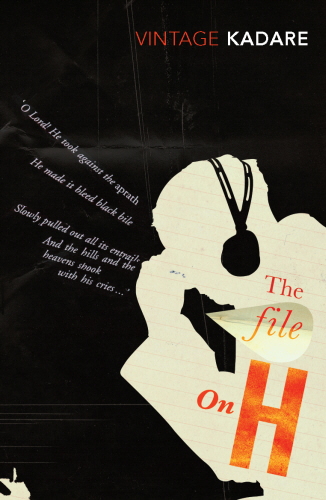
If this sounds like a weird intersection of things, and you like the weird intersection of things, well then you are in luck! Kadare’s The File on H is a clever little novel which imagines what would have happened if two Parry and Lord stand ins had gone to Albania instead of Yugoslovia. As one can imagine, hijinks ensue as the two have to deal with the Albanian provincialism they encounter.
I don’t know much about Kadare as a writer, but it seems like he was a bit down on his home country. Well, a look at what was going on in the country at the time he was living helps one understand why. It was not the best place to be in at that time. It was a country with its share of problems, but that only comes out a bit in this story. What comes across most strongly at the beginning and at the end is more of a comedy of errors, with a lot of humor thrown in. The Albania characters are provincial, and cannot fathom why two foreign scholars would come to Albania to study Homer (a well known Greek author). The irony is particularly rich if you know who Parry and Lord are.
I really liked this story, and only a bit because it was a really strange cross of my interests. The comedy of errors part really held this together for me. That being said, some of the characters were rather thin, and there was a part in the middle that focused on the studies being conducted by the foreign scholars. I also could not help but feel like the settings for the novel were not particularly well described. The book is set in the 1930’s, and in my life time Albania was the third poorest country in the world (due mostly to the dictatorship the country lived under). How would two foreign scholars from Harvard deal with being in a small inn in the middle of the Albania countryside? What were the accommodations like? I was curious about these details, but they just weren’t really present. I think these details might have gone against the humorous style of the book.
When the novels end came the resolution felt rushed, with the majority of the action happening of scene and the reader only being told about it later. Perhaps Kadare lost steam to work on this at some point. It is not his most famous work, but it certainly wet my appetite to get around to reading him, putting both Broken April and Twilight of the Eastern Gods on my to read list.

 Failures in Polymathy