In the middle of 2012, I had an episode which I affectionately refer to as my epistemic collapse. I don’t want to bore anyone with the details, but a handful of experiences obliged me to call into question practically everything I knew, and I decided to blank slate my beliefs. After many reevaluations, I came out of the experience a fundamentally different person than I went in. I learned a lot about the branch of philosophy known as Epistemology, and it has became a slow festering obsession since
I have no idea how many people go through their own such experiences in life, but I don’t think I have had many conversations with people who have had. I won’t go so far as saying it is a unique experience, but it is unique in my circles, or at least no one thinks to tell me about it.
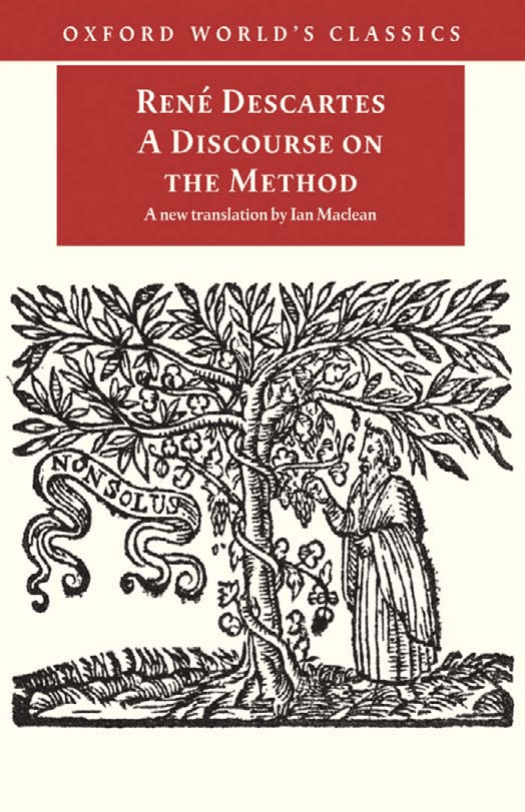
I picked up Descartes Discourse on the Method only because it was ‘the cogito ergo sum’ book, and it was shorter than some of the other books on the good ol’ TBR shelf.I had no idea that within it, Descartes outlines his own experience with a similar Epistemological crisis.
When people talk about a book you rather disliked, you come to the conclusion that perhaps that whole ‘Pleasure of the Text’ can come from a multitude of different things for different people (which is perhaps why a phenomenology of an aesthetic experience would be such a challenge, and perhaps such a pointless challenge, to write). I think the experience of enjoyment for me was a phenomenon my GenZ friends would describe as ‘being seen’. They have explained it to me as an opposite of being judged, a feeling of being understood in the specific complexities of one’s being.
People don’t comfortably speak about that one time they went a little mad and asked themselves how they could really justify any of the opinions they held, and how they built themselves back up from radical skepticism. To find that someone else was, and that history has to some extent found the author’s journey worth preserving, gives my own experience some added validity. Especially because in these dark years of our lord 2025, we are all still left epistemologically in the dark about the world.
Descartes talks about the expectation his childhood had built within him regarding the ultimate value of a liberal education, and ultimately feeling betrayed by that sentiment, coming to understand that no amount of knowledge and no amount of books read will ever give anyone more confidence with which to operate in the world. At some point, one must surely just stop.
I really loved the book up until that point. I loved the rules he gave himself for operating in the world whille he rebuilt his epistemological basis. I loved reading how he reasoned himself into the Cogito to begin with.
And I disagreed with everything after that point.
I am not smarter than Descartes. I would never pretend to be. But I am living centuries after him, and after Phineas Gage, and after humanity has learned about split brain patients, Capgras delusion, and stroke survivors and many more horror stories of the brain. I have read a book or two by Oliver Sacks. I understand all to well that I am just one bad concussion away from not being the self I am now. I am one bad concussion away from living in a vastly different world. If Descartes lived in 2025, he could not sincerely have written and believed all the words he wrote after Cogito Ergo Sum.
For a guy who has read some, and continues to read others, I have always been pretty down on the classics. I often tell people, particularly people who are just starting to become readers later in life, that they will truly be ok if the never pick up Homer in their lives. You will likely get fucking nothing from reading The Iliad in 2025. I still stand by that. Despite this, this one worked for me. Your mileage will vary greatly.
As a nuts and bolts note, I picked up a digital version of this and read it on my Kobo. This unfortunately led to the inconvenience of none of the notes working all that well. I bought one book via Amazon close to a decade ago with functioning two way links and an organized system of foot and end notes incorporated in a way that allowed for ease of reading. Since then, I have been hopefully reading digital books chasing the dragon of that experience, and wondering if I had encountered the one master-crafted digital book that managed to pull it off. It is worth mentioning in a review like this one because the notes really do help clarify the book in many places, but often it was massively inconvenient to actually bother to read them. It slowed down the reading experience immeasurably, and at some point I did just give up trying.

 Failures in Polymathy