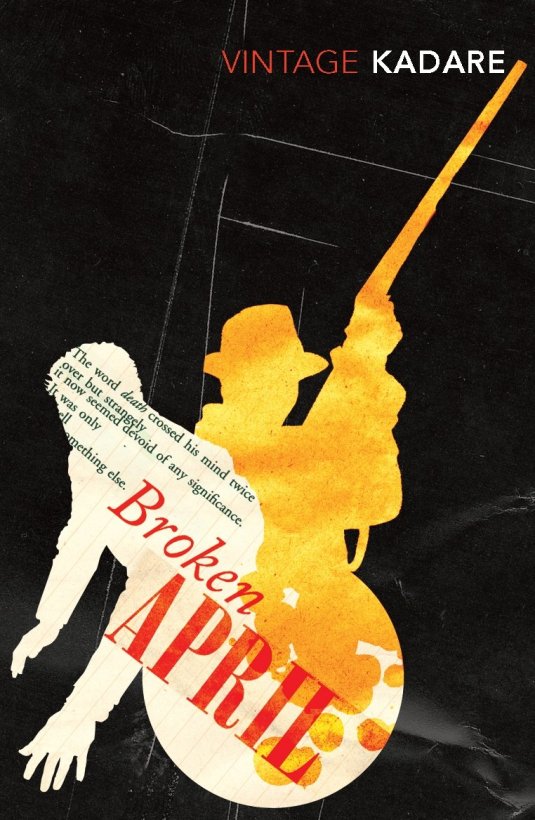
This was the second Kadare book I read, but oddly enough the first one I heard about. A person I met in passing was reading this at the time of my meeting them, and they described the book as being about ‘the bloodfueds in Albania’.
At the time I didn’t know much about Albania, and less still about bloodfeuds. This is a pretty accurate description of the book.
The Albanian highlands have many rural people who – apparently still to this day – practice bloodfeuds (the taking of one life in payment for a life previously taken). The story follows a protagonist who opens the novel by assassinating a man solely based on the rules of their land (for this person had killed someone in the protagonist’s own family), and thus condemning his own life in the process. The rules of these primitive people have led to violence begetting more violence, and an a chain of homicides leading all the way back to a crime that isn’t all that significant to begin with.
There really isn’t much there for a narrative.
So this is broken up with a few lengthy middle chapters about a couple of socialites from Tirana, honeymooning on the the Albanian highlands. Even though they rather early on encounter our protagonist, much of these chapters feels empty.
(The other book I read by Kadare also had a very weak middle chapter, but that one felt more at odds with the tone the author had previously set up for his story. The fact that is happened again here was a bit annoying.)
I get having the outsiders perspective on the bloodfeuds as being helpful to the narrative. Ultimately, the two parts did not fit together for me.
TO SPOIL, A BIT:
Ultimately the female of the honeymooning couple pays a visit to the protagonist in a tower (a place where people currently being hunted by the bloodfeud are meant to be safe), where something never really mentioned occurs. The narrative gives us no reason to assume anything – much less to assume the worst happened. It’s never really addressed. In the conclusion, the protagonist is killed unceremoniously, and the cycle of violence is assumed to continue.
Sure, it was an informative novel, if you were looking for a glimpse into the lives of people who you are very unlikely to otherwise meet. But it didn’t feel like a very good story. I have one more book by Kadare in my possession as of my writing this. The book is Twilight of The Eastern Gods, and my enjoyment of that will likely determine whether I keep going with this author or not.

 Failures in Polymathy