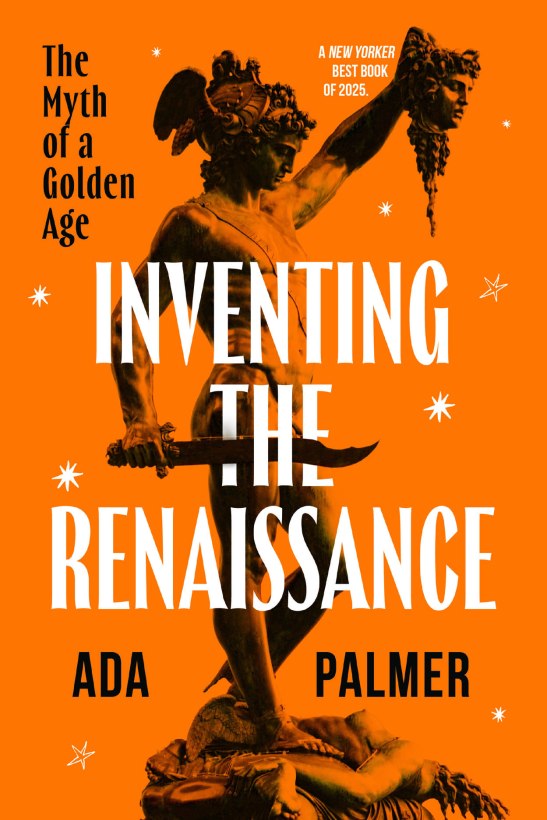
After hearing so much high praise for Ada Palmer’s Terra Incognita sci-fi series, I was pretty determined to read some of her books. Whelp, I fucked up the instructions and here I am reading some of her non-fiction instead.
Jokes aside, I was intrigued by the title before I checked to see that this indeed was the same Ada Palmer as the sci-fi writer. Why the intrigue for this title? Idiots and peddlers of a certain brand of economics-as-incantation bandy about the term “invisible hand” as if Adam Smith had spent reams of paper discussing the magic invisible hand. He used it once, and it is a rather throw away sentence. Edward Gibbons used the term ‘dark ages’ to refer to the period after the “fall of the Roman Empire” (which is another turn of phrase that is on my personal shitlist) precisely once, at which point the whole western world has decided to reframe that entire historical period with that moniker, which fits rather poorly. We have massive misconceptions about the world we live in, and they unfortunately seem to stem from our overreliance on too simple heuristics. This book seemed to promise a deep dive on exactly that subject, but with a focus on the Renaissance.
The Renaissance underwent a similar branding brouhaha, and Palmer is here to inform us why we are wrong about how we think about it. Did you ever stop to consider that Machiavelli’s “The Prince” was written for The Prince? It was a book meant for an audience of 1. Did you ever stop to think that if you got in trouble with the law before modern times it would at some point be a problem for your landlord, as they are vouching for you via the patronage system? The past should be hard to conceive of, precisely because back then they did things differently, and those differences matter.
We live in a time when most people do not actually know history very well, but love to tell you that somehow it rhymes or repeats or some other such cliche, before shoehorning a prediction for the future based on the one or two things they do remember from a history class they took 25 years ago. I kinda wish people would read things like this, if for no other reason but to add a layer of complexity to their hare-brained predictions.
So what did I specifically learn from reading this? It wasn’t just Gibbons who condemned the medieval to the moniker “dark ages”. Apparently Petrarch started this (still, why the fuck are we just taking his word for it?). Anyway, maybe I should move on to the Terra Incognita series.


Soo…. would you recommend it? I enjoyed her Terra Ignota series a lot, and like reading about history.
LikeLike
Well, I would bet money her non-fiction style differs greatly from her fiction style. There was something to her rambling, anecdotal style that I liked, as it reminded me of the best lunatics of my university days. It’s not for everyone though
LikeLiked by 1 person